
Spaceflight is the most rigorously engineered activity humans have ever attempted. Every bolt is tested, every trajectory is calculated to fractions of a second, and every procedure is rehearsed hundreds of times before anyone leaves the ground. And yet, on the morning of a launch from Baikonur, a crew of highly trained professionals will stop the bus, step outside, and urinate on the rear right tyre. It is one of the best known cosmonaut superstitions in spaceflight, and nobody involved treats it as a joke.
These rituals are one of the stranger features of an otherwise relentlessly rational profession. They are not marginal habits either. They are followed carefully, in a fixed order, by people whose lives depend on engineering rather than luck.
What makes them worth examining is not that they are odd. It is that they are so recognisable. The same instinct that keeps a launch tradition alive for sixty years is the one that makes a card player refuse to change seats when the night is going well.
The Rituals Every Baikonur Crew Follows
The list is longer than most people expect. Before travelling to the launch site, crews lay red carnations at the Kremlin wall where Yuri Gagarin’s ashes are interred. At Baikonur, each crew member plants a tree along Cosmonaut Alley, continuing a tradition Gagarin himself began. His original tree is still standing.
Two days before launch, prime and backup crews get their hair cut. The night before, they gather to watch a 1969 Soviet film called White Sun of the Desert, a ritual so entrenched that the film has been screened before launches for decades. On launch morning, they drink a small amount of champagne and sign the doors of their rooms at the Cosmonaut Hotel, leaving a wall of signatures behind them.
An Orthodox priest blesses both the rocket on the pad and the crew at the hotel, a practice that began in 1994 and continues today. Visitors watching the rocket roll out to the launch pad place coins on the railway tracks to be flattened, keeping them afterwards as tokens.
Then there is the bus tyre. Gagarin reportedly asked the bus to stop on the way to the pad in 1961, and the resulting improvisation became a fixed part of the sequence for the cosmonauts who followed him.
Why Engineers Keep Their Rituals
None of these actions changes the probability of a successful launch. Every cosmonaut knows this. They are not confused about causation, and nobody at Roscosmos believes that a missed haircut would compromise a Soyuz.
The rituals persist because they do something else entirely. They mark the transition from ordinary life to an extraordinary and genuinely dangerous undertaking, and they do it collectively, with the whole team participating in the same sequence at the same time.
There is also a continuity argument. Following the exact steps that Gagarin’s successors followed connects a modern crew to every flight that came before, including all the ones that came home safely. That is not a probability calculation. It is closer to belonging.
It is worth noting how firmly these habits have survived institutional change. The Soviet Union dissolved, the programme was restructured, international partners arrived with their own procedures, and the traditions carried on regardless. Anything that outlasts that much upheaval is clearly doing something for the people who keep it going.
The Same Instinct at the Card Table
Move the setting from a launch pad to a casino floor and the behaviour barely changes. Players blow on dice, keep a particular coin in a particular pocket, sit in the same chair, and refuse to count their chips mid-session. Ask them whether any of it affects the outcome and most will say no, then do it anyway.
This crossover is visible even in how modern gaming platforms present themselves. A site like luckywands builds its entire identity around the imagery of charms and talismans, which works precisely because the association is already sitting in the player’s head before they arrive.
The vocabulary gives it away. We talk about a lucky streak, a lucky seat, a lucky night, in the same breath as we admit that the odds are fixed and indifferent. Both things are held at once without much difficulty.
Lucky Objects, in Orbit and in Pockets
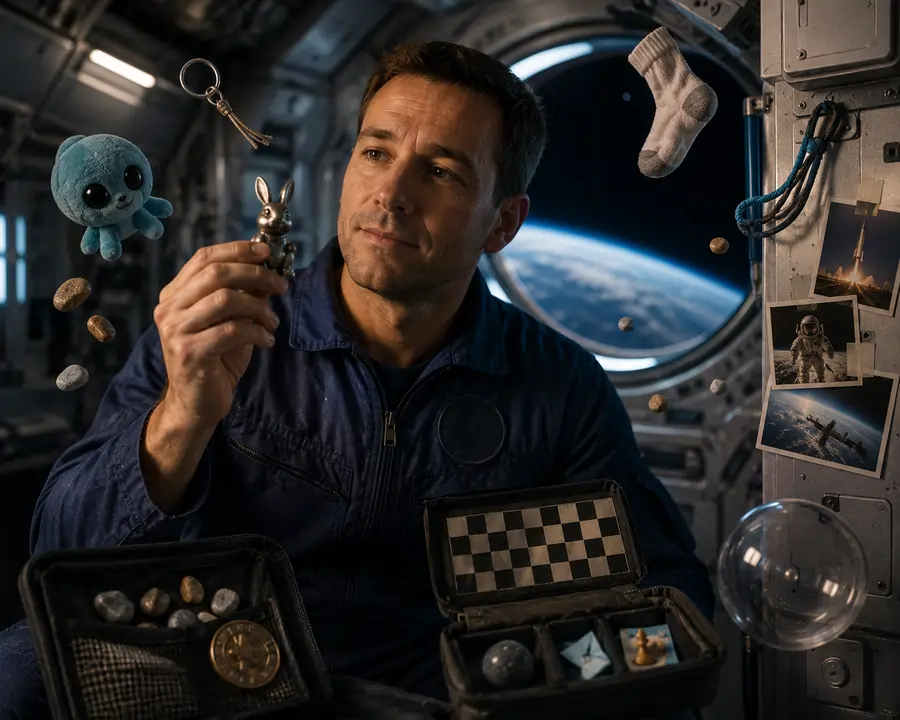
Cosmonauts and astronauts carry small objects into space that serve no technical function. The best known is the zero gravity indicator, a soft toy hung on a short string inside the capsule, which begins to float when the spacecraft reaches orbit. It is a genuine visual cue, but the choice of object is entirely personal, and crews often pick a toy belonging to one of their children.
Functionally, it is a piece of string and a stuffed animal. Emotionally, it is a talisman being carried into the most hostile environment humans routinely visit, chosen by someone who has every reason to think carefully about what they bring.
The parallel to a lucky coin or a worn charm bracelet is close enough to be uncomfortable. In both cases, a small object stands in for something the person cannot control, and holding onto it makes the uncontrollable part feel slightly more manageable.
What Superstition Actually Provides
Psychologists tend to describe this as an illusion of control, and the phrase is accurate without being dismissive. When an outcome genuinely lies outside your influence, performing a familiar action restores a sense of agency, and that feeling has measurable effects on stress and composure.
For a cosmonaut strapping into a Soyuz, composure is not a trivial benefit. Someone calm enough to run a checklist properly is safer than someone who is not, even if the calm arrived by way of a film screening the night before.
The Mir Space Station operated for fifteen years, hosted crews from a dozen countries, and survived a fire and a collision that could easily have ended it. Across all of that, the pre-launch rituals continued unchanged, because the people running the programme understood that engineering handles the rocket while ritual handles the crew.
Where the Comparison Stops
There is one difference that matters, and it is worth being precise about it. A cosmonaut’s ritual costs nothing. A haircut, a film, a tree, a signature on a door. If it produces nothing but calm, it has still paid for itself.
A gambling superstition can cost a great deal, because it usually comes attached to a decision about money. Believing that a seat is lucky is harmless. Staying in that seat past the point you meant to leave, or increasing a stake because a run feels overdue, is not the same thing at all.
The gambler’s fallacy, the belief that a losing run makes a win more likely, is the clearest example of a superstition that actively costs money rather than merely providing comfort. Each outcome is independent, and no amount of accumulated bad luck changes what happens next.
Rituals Are Fine, Limits Are Better
The practical approach is to keep the ritual and drop the belief that it does anything. Carry the lucky coin if you enjoy carrying it, but decide the budget and the finish time before the session starts, when the decision is still being made by the rational part of your brain rather than the hopeful one.
Cosmonauts, for all their traditions, do not rely on any of them. The rituals sit on top of an enormous structure of engineering, testing, and procedure. The superstition is the decoration, never the foundation, and that is exactly the right relationship to have with it.
Readers in Ireland can find official guidance and support through the Gambling Regulatory Authority of Ireland, which oversees licensed operators and publishes information on staying in control, should luck ever start feeling like something more than a bit of harmless ceremony.
Sixty years after Gagarin, crews still plant trees and still watch the same film. It is a good reminder that rationality and ritual have always coexisted comfortably in human beings, including the ones who calculate orbital insertions for a living. The trick is knowing which of the two you are actually depending on.